
Apartment as Container
Zen to Zama and the horrors of homemaking

I was sitting in an earthquake preparedness meeting at work. From our wide classroom windows, I watched the slow intent of yellow-striped Sobu line trains running alongside the canal into Iidabashi station. The cherry trees were in tired bloom, and the brown dregs of fading blossoms sludged the canal. Something about this memory tells me this meeting took place post-Tohoku earthquake, that we’d already tested our readiness, but I could be wrong.
‘Try not to have things on shelves, or piled too high.’
There was a ruffle of chuckling around the room.
‘Why is that funny?’
It was funny because we all lived on top of ourselves in tiny Tokyo apartments. One friend had a 19 metre-square corner flat - you’d have to squeeze past her massive coat collection in the tiny genkan to enter the apartment. My own abode was 25 square meters and felt positively roomy in comparison. There were no cupboards save for the built-in wardrobe and the three under the kitchen counter, so everything had to sit on shelves, wire racks, and bookcases – crucially, ones we weren't allowed to fix to the walls thanks to rental contracts. I could tell how strong an earthquake was by what started rattling in the apartment. Magnitude 2 or 3 would set the Showa glass door a-rattle; a 5 would wobble the bookcase; anything larger set the refrigerator going. In fact, after March 11th 2011, I got so good at reading the wobbles that I could even tell you which fault line was moving.
Were we, I wondered, not meant to have stuff? Did all Japanese people live in a stereotypical Zen-like simplicity, and us gaikokujin were getting it wrong? I’d been to enough apartments to know this to be false. So who was living like this?
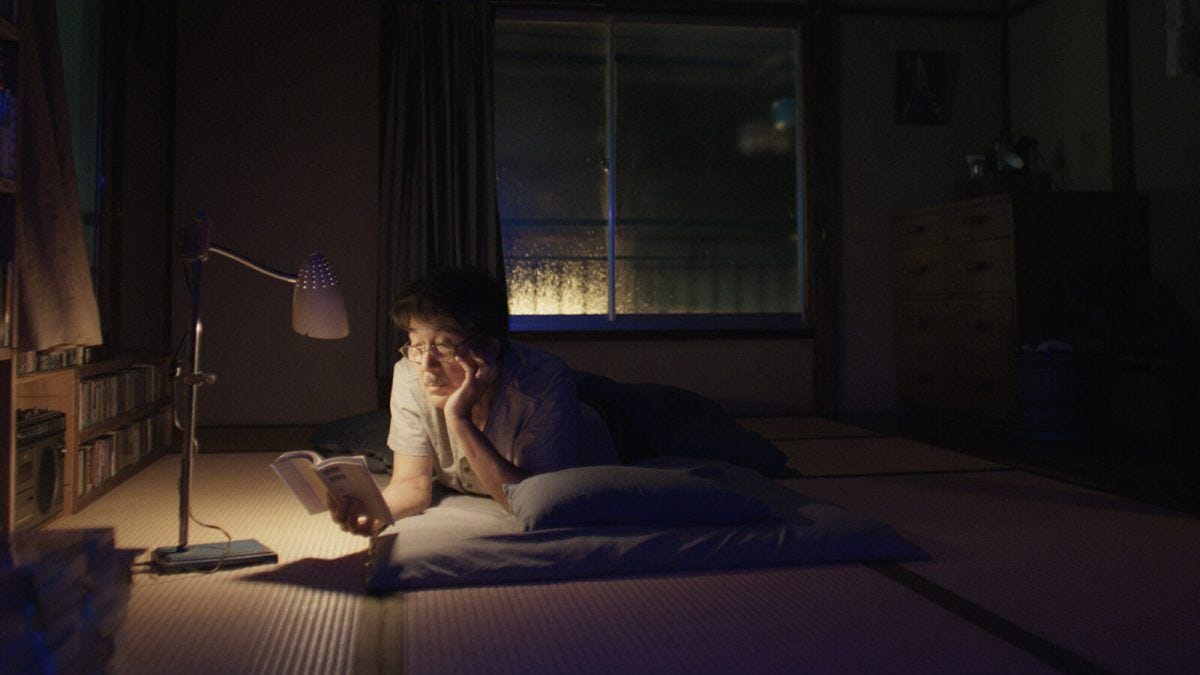
In Wim Wender’s Perfect Days (2023) the protagonist, Hirayama-san, lives a spartan and repetitive existence, waking early in his Tokyo apartment before heading out for the day to clean Tokyo’s architecturally iconic toilets. He bathes at a neighbourhood sento and eats in a restaurant in the basement of Asakusa station. At home, Hirayama prunes his bonsai trees and reads his second-hand books before bed. When finished, he places them in a neat pile against one wall, along with his cassette tapes. It’s a beautifully simple and austere way of life, paring back to the essentials to make room for small pleasures and living in the moment.
According to the Asia Nikkei newspaper there’s an increasing trend for young people in Tokyo to live in bathroom-less homes. Apparently, this chimes with the youthful desire for a simple life, placing an emphasis on connection and social interaction. But I wonder if the young preference for simplicity is merely a face-saving move to conceal a bigger issue - that a home with a bathroom is unaffordable. Hirayama works a gruelling minimum wage job and lives frugally as a result. The movie gives a brief glimpse into his previous life when his chauffeur-driven sister visits, but we receive no answers as to why this man has chosen an almost monastic existence over the comforts of wealth. Meanwhile the economic pressures making bathroom-less living a necessity for Japanese youth, rather than a lifestyle choice, are fairly obvious.
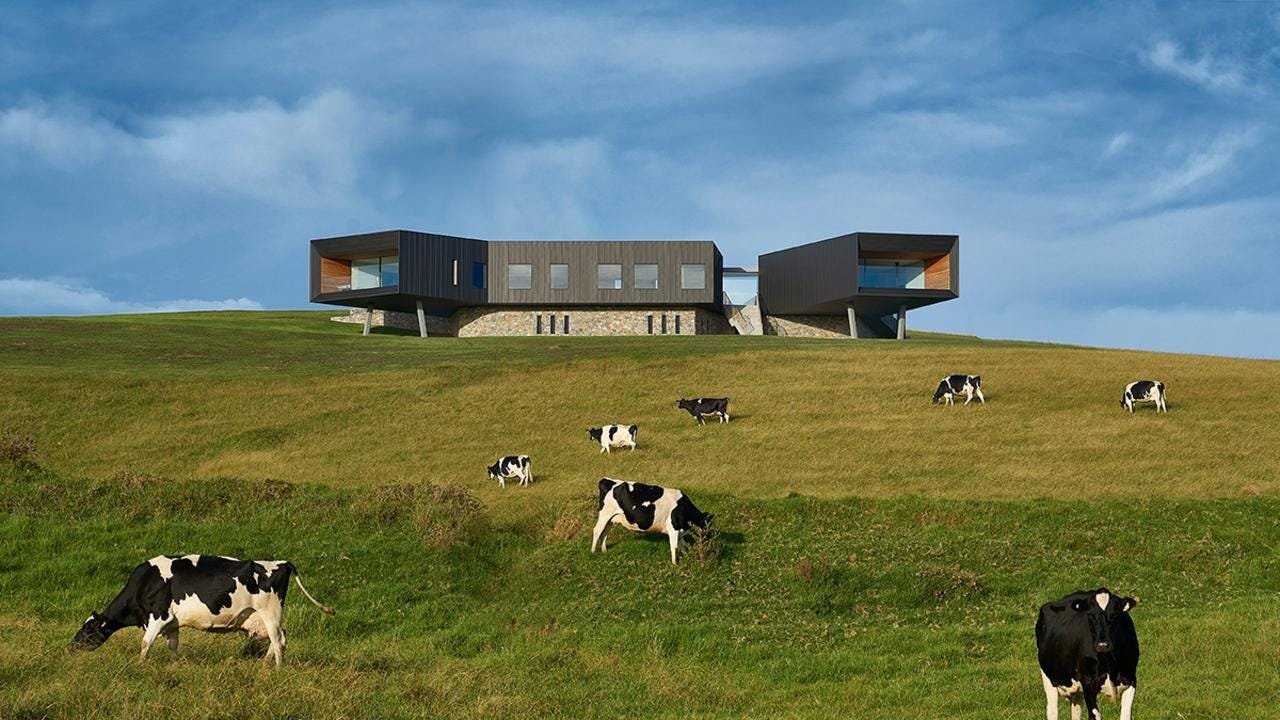
The romanticised minimalism of the poverty of Perfect Days finds itself equally coveted on the opposite side of the wealth spectrum. In films such as Ex Machina (2014) and The Invisible Man (2020), men (with murderous attitudes towards women) own huge, remote and empty houses where sleek lines and emptiness, a showcase of assets, take the place of comfort and things. This minimalism and its connection to a certain aesthetic of power is a useful lens through which to consider how domestic spaces are portrayed more broadly in popular culture. But what happens when we shift our focus from these deliberately barren spaces of wealth to a more ostensibly "normal" American home and particularly how the 'performance' of domesticity shifts across different contexts?
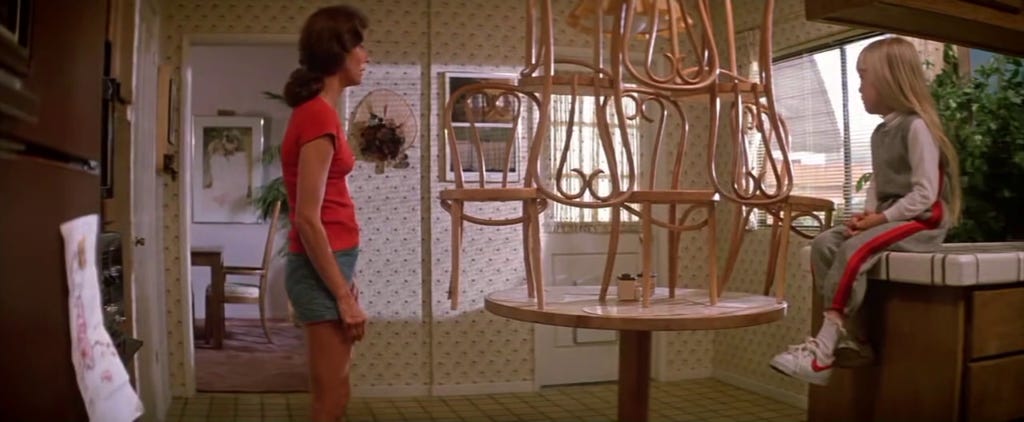
In RS Benedict’s essay “Everyone is beautiful and no one is horny”, Benedict detours from a treatise on how modern superhero movies have become beautiful but sexless to talk about the presentation of American domesticity in Tobe Hoopers’s Poltergeist (1982):
“The house looks real, too. There are toys and magazines scattered around the floor. There are cardboard boxes waiting to be unpacked since the recent move. Framed pictures rest against the wall; the parents haven’t gotten around to mounting them yet. The kitchen counters are cluttered and mealtimes are rambunctious and sloppy, as one expects in a house with three children. They’re building a pool in the backyard, but not for appearances: it’s a place for the kids to swim, for the parents to throw parties, and for the father to reacquaint himself with his love of diving.”
In the 21st Century, the reality of living in a space with your stuff has been superseded by the desire to appear that you don’t. Instagram and Architectural Digest tours of wealthy homes never show the dog hair on the carpet, or the forgotten toilet roll tube behind the U-bend. Everything is well-lit, curated, of varying levels of taste, but always clean and tidy. It seems like part of a trend reflecting the political and economic mood. Sludge Mag’s “Elegance as Erasure” examines the conservative “clean girl” aesthetic on Instagram, a trend for muted, pared-back fashion choices that sit well with austerity: “Clean is a value judgement…messy becomes a threat.” Anything which does not fit the “white, skinny and wealthy” standard becomes immoral.
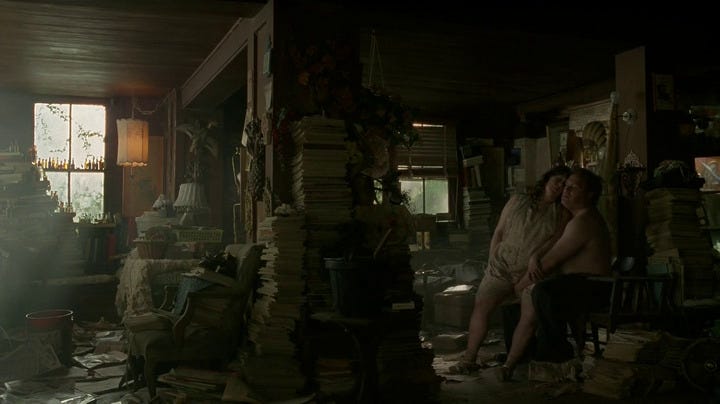
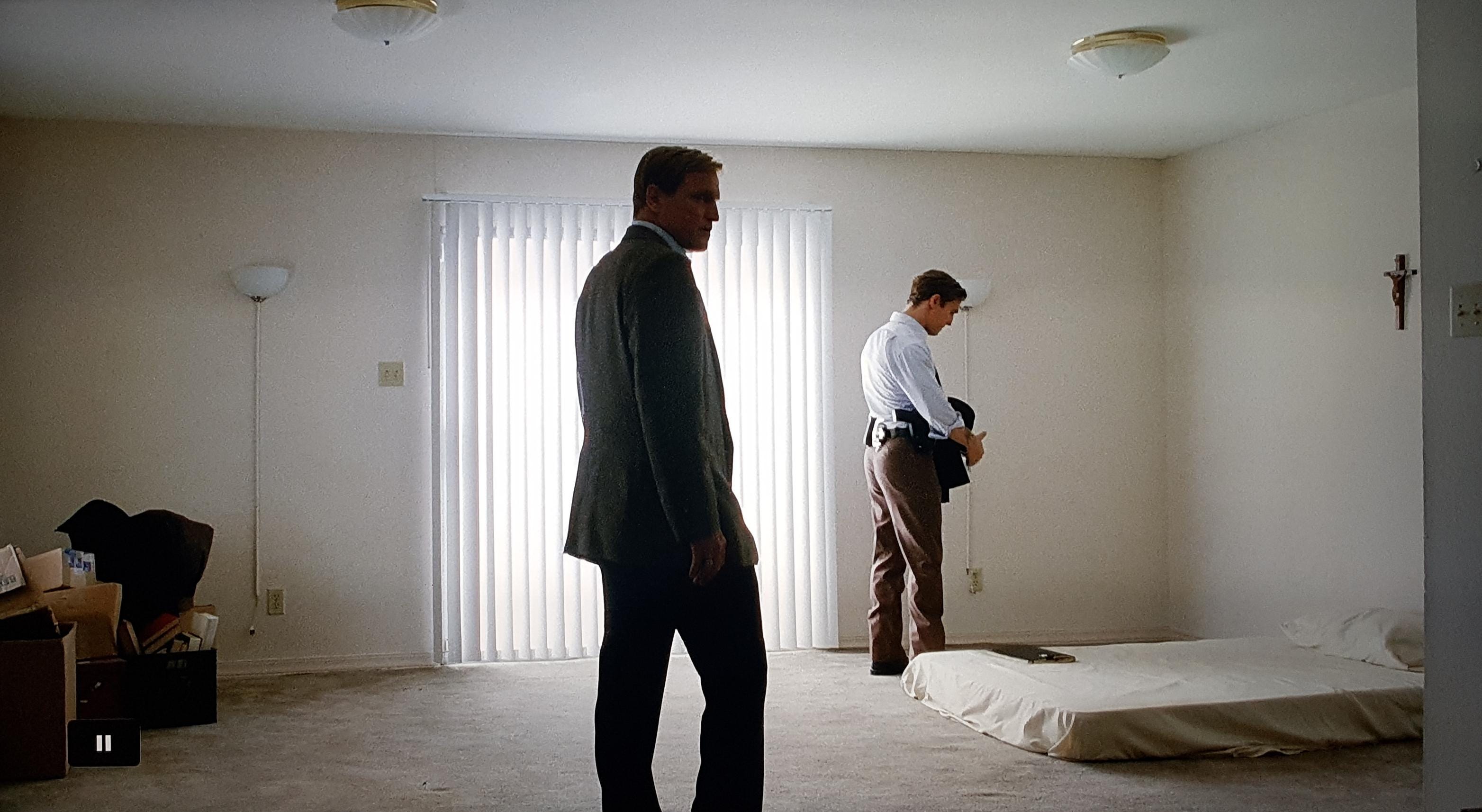
It's interesting then, that when I think of modern depictions of poverty in movies and TV, it’s often a co-morbidity of depravity. Take the Childress house in True Detective: Season 1 (2014), or the Firefly farmhouse in Rob Zombie’s House of a 1000 Corpses (2003) as examples.1 The clutter and hoarding in the Childress house (and in Carcosa beyond that) is at least partly a generational hangover of things, but the piles of children’s clothes in upstairs rooms speak to other off-screen horrors. When Detective Marti Hart tries to track down the house phone to call for backup, it’s a case of digging through piles of junk to find it. More perversely and comically, the Firefly house is, as the movie title suggests, ornamented with the bodies of victims recent and otherwise (I’ve never forgotten the cheerleaders piled on the bed like rag dolls). Poverty equals mess and criminality, immorality, but as we’ve seen in certain narratives, owning a house as clean as your code is no freedom from villainy.
I think that, while the showroom perfection of Instagramable interiors bombards our timelines, the reality for most people lies somewhere between Southern Gothic and Japanese Zen, and it probably depends on what day of the week it is. Regardless of their aesthetic or intended purpose, these spaces, from the messy real to the aspirational ideal, require labour. This often invisible work, the constant effort of maintenance, becomes more obvious when we consider homes designed with more attention to facade than function. RS Benedict draws on Kate Wagner to illustrate this point perfectly in the context of McMansions:
“These features exist to increase the house’s resale value, not to make it a good place to live. No thought is given to the labour needed to clean and maintain these spaces [my italics]. The master bathroom includes intricate stone surfaces that can only be scrubbed with a toothbrush; the cathedral ceilings in the living room raise the heating and cooling costs to an exorbitant sum; the chandelier in the grand entryway dangles so high that no one can replace the bulbs in it, even with a stepladder.”
Wagner’s description highlights the inherent labour baked into these extravagant designs. But the reality is, this issue of domestic labour isn't confined to McMansions. Even in more modest, everyday homes, the question of who does the work, and the emotional weight attached to that work, is ever-present. This tension is something I grappled with when I lived in my tiny Tokyo apartment. I wanted a cleaner, but it felt like such a… wanky thing to do. It felt frivolous and immoral to pay someone (most likely a foreign woman) to clean when I should have been able to take care of it all myself (I couldn’t). Years later back in the UK, while talking to the lady who cleaned my share-house twice a month, I told her how guilty I felt at having someone come to clean my bathroom and that I did my best to tidy before she showed up. She said the key to a tidy living space was either time or money - you either have the time to do it yourself or the money to pay someone else to do it for you. That for most people it’s not achievable.
Ultimately, my relationship with my living space is fraught with guilt. I feel guilty for the mess I make, and paradoxically, guilty even when the house is clean, knowing its fleeting state. The elusive calm of a tidy home feels perpetually out of reach. Perhaps expert organisational advice, beyond the internet’s endless (and supposedly free) tips, would help. Despite aspiring to a minimalist ideal, fuelled by images of immaculate interiors, I also crave my clutter. Architectural Digest sets an impossible gold standard against my own lived reality. Even well-meaning remarks about my books or furniture trigger a sense of having too much. As one writer friend reassured me after a recent outpouring of these anxieties, ‘It’s okay to have stuff.’ Part of me longs for the freedom of travelling light, but not so light that I'm raw-dogging the renting life with only the symbol of a god I don't believe in adorning the walls (I'm looking at you, True Detective’s Rust Cohle).
Beyond these personal reflections on domesticity, it's important to recognise the apartment itself as a container, capable of holding a vast range of experiences, both mundane and extreme. In 2017, a police raid on an apartment in Zama, Kanagawa prefecture revealed a truly horrific reality: the dismembered bodies of nine people, all murdered within a four-month period. Dubbed the "Twitter Killer," the now-convicted occupant lured suicidal young people to his apartment, killing them and storing their dismembered bodies in coolers, using cat litter to mask the odour of decomposition. Assuming he lived in an apartment roughly the size of mine, I was morbidly impressed by his grim efficiency in managing to store so many bodies within such a confined space. (I once squeezed thirteen people into my apartment for a party and considered that a success, at least for a few hours.) Perhaps, ironically, a key factor in his efficient management of this horrific “clutter” was simply the presence of a bathroom where bodies were dismembered – a feature now being foregone by the young in Tokyo apartments.
Extremes of spatial organisation aside, the absurdity of equating visual order with moral and financial superiority is worth recognising. Perhaps it's time we (I) actively resisted the relentless marketing of domestic visual perfection. Instead of striving for the unattainable showroom, maybe true domestic contentment lies in embracing the glorious, messy reality of living in a space. After all, as that earthquake meeting in Tokyo reminds me now, what truly matters isn't the pursuit of emptiness, but the human connection and stories we forge within our cluttered, imperfect homes.
I will accept that my frame of reference leans Gothic, which historically lends itself to dust and cobwebs.